A developer is discussed
News coverage described a “trusted Dallas developer,” but no signed purchase agreement, deposit, price, or schedule was publicly identified.
What happened at Sikes Senter, where the project stands today, and a practical way to build an economic strategy around the strengths Wichita Falls already has.
Read the case studyThis case study examines how Wichita Falls came to own Sikes Senter, what is known about the project a year later, and what residents should expect from their leaders next.
It relies on public agendas, records, and news reporting. It distinguishes documented facts from recommendations, and does not claim to know what any official privately intended.
Wichita Falls paid for control of Sikes Senter. Before the purchase, after it, and today, no one has shown the public what that control is supposed to accomplish.
The public was asked to support a quick path to redevelopment. The purchase, however, closed before a buyer, price, or development schedule had been publicly secured.
News coverage described a “trusted Dallas developer,” but no signed purchase agreement, deposit, price, or schedule was publicly identified.
City Council and economic-development boards approved a purchase up to $28 million, with financing up to $19 million.
Public entities acquire Sikes Senter for approximately $27.5 million.
Forward Wichita Falls was reportedly reviewing proposals; no firm developer agreement was reported.

Mayor Short argued the city needed to control what happened to the site. The public question is not whether control was valuable—it is who would buy the property, for how much, and on what schedule. The paper concludes those commitments had not been made public before the city took on the purchase.
This case study calls on Wichita Falls voters to not re-elect Mayor Short.

Kitchens has since stepped down as CEO of the Wichita Falls Chamber of Commerce and left Wichita Falls to take the CEO role at Greater St. Louis, Inc. He helped promote a broad redevelopment vision—new retail, major uses, and even a stadium tied to MSU. The public record cited in this case study does not show binding financial or institutional commitments behind those ideas before the purchase vote.
Owning the property was only the first decision. An economic strategy would state the jobs, industries, employers, investment, and measures of success the purchase is meant to serve.
Forward Wichita Falls sought to withhold Sikes-related records. The Texas Attorney General concluded it had not shown those records were exempt under the Public Information Act.
Commercial terms can require confidentiality during live negotiations. Residents' exposure, decisions, and signed commitments should not remain unclear.
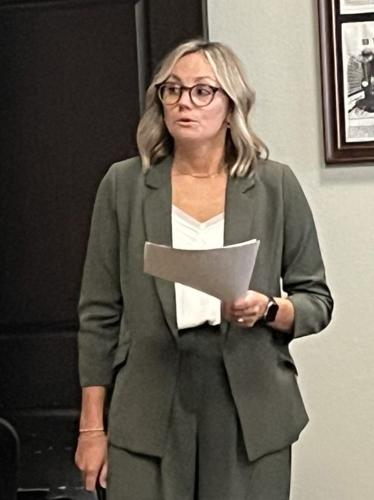
Nearly a year after closing, Forward Wichita Falls was still reported to be evaluating proposals, with no firm offer publicly reported. The paper calls for the organization to publish its developer pipeline and fully comply with the Attorney General’s public-information ruling.
This case study calls for Moriah Williams to be fired as CEO of Forward Wichita Falls.
FISTA’s model is not a template for Wichita Falls to copy wholesale. Its lesson is more useful: identify a genuine local advantage, organize around it, recruit partners, and measure outcomes in public.
Figures reported by FISTA. They are encouraging indicators, not proof that mall ownership alone caused the growth.
Within three years, make Wichita Falls the first choice for people trained in aircraft production, repair, and maintenance—and make sure employers can hire them here.
Employer-defined skills, short paid training courses through Vernon College and the workforce board, and guaranteed interviews for graduates. Measure the share of announced jobs filled by local hires.
A single transition desk for separating airmen, spouses, retirees, and civilian instructors—translating military training into credentials and connecting people to local employers before they leave.
Identify the parts and services major plants buy outside the region, then help local small businesses gain the certifications and equipment to compete for that work.
| Phase | Goal | Key actions |
|---|---|---|
| Months 0–6 | Confirm and commit | Secure written hiring needs, select a lead organization, compare sites, seek outside training funds, and publish the baseline. |
| Months 6–18 | Launch and test | Run first employer-designed courses, open the transition desk, start supplier qualification, and publish quarterly results. |
| Months 18–36 | Expand what works | Scale programs that hit their targets, end programs that do not, and commission an independent review. |
The Partnership may need shared training bays, employer testing space, and a public front door for job seekers. Sikes Senter should compete with Vernon College’s Skills Training Center and sites near the major plants—and win only if it delivers training faster at the lowest total cost.
Figures from reporting and organizations are credited to their original publishers. The structures, phases, and programs on this site are recommendations—not adopted city policy.
After that, Wichita Falls can build a real economic strategy around confirmed employer demand, Sheppard’s training pipeline, and the region’s colleges—then report results in public.
Call for accountability: Mayor Tim Short and Forward Wichita Falls CEO Moriah Williams should resign or be removed from their positions. Wichita Falls needs leaders who will put the public record, a real plan, and measurable results ahead of political promises and polished renderings.
Download the full case study (PDF)